Loading... Please wait...





- Cycling Shoes
- Cycling Clothing
- Bike Parts
- Cassettes
- Pedals
- Cleats and Accessories
- Bike Chains
- Mudguards
- Saddles
- Seatposts
- Road Handlebars
- Handlebar Tape
- Handlebar Grips
- Bike Stems
- Inner Tubes
- Puncture Repair
- Bike Cables
- Road Wheelsets
- Brakes
- Mountain Bike Forks
- Bottom Brackets
- Bike Care and Maintenance
- Track Pumps
- Bike Tools
- Cycling Multi-Tools
- Mini Pumps and Co2
- Bike Tyres
- Cycling Helmets
- Cycling Accessories
- Car Bike Racks
- Turbo Trainers
- Bike Boxes
- Road Bikes
- Orro Parts and Accessories
- Kids Bikes
- Children's Bicycle Seats
- SALE
Best Cycling Shoes for Bunions: 2026 UK Fitting Guide
Posted on 23rd Sep 2026
Table of Contents
- What to Look For in Cycling Shoes for Bunions
- Quick Comparison: Features That Matter for Bunions
- Wide Fit Cycling Shoes UK: What Sizes and Brands Actually Offer
- How to Stretch Cycling Shoes for Bunions
- Cycling Shoe Insoles for Foot Pain: Support That Protects Your Bunion
- Common Mistakes When Buying Cycling Shoes for Bunions
- Conclusion
- Frequently Asked Questions
Last Updated: September 22, 2026
What to Look For in Cycling Shoes for Bunions
Finding the best cycling shoes for bunions starts with one non-negotiable: a toe box that lets your big toe joint sit straight instead of pressing against the side of the shoe. At Salt Dog Cycling, we talk to riders every week who have spent years squeezing into race-fit shoes and paying for it on every pedal stroke. The right pair changes that completely. Below, we break down exactly what to check before you buy, plus how to stretch a stubborn pair and which insoles actually help.
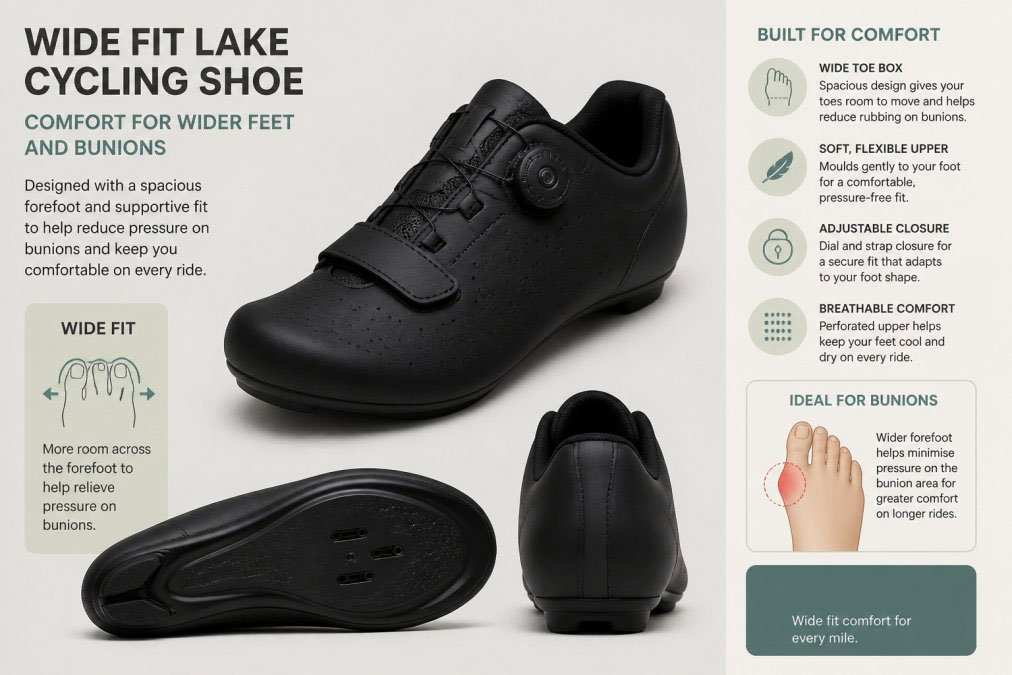
Toe Box Shape and Width
Toe box shape matters more than overall shoe size. A shoe can be a size too big and still crush your bunion if the front tapers to a point.
Look for a rounded or squared-off front that follows the natural spread of your toes. Wide fit cycling shoes UK brands label as "wide" or "E/EE" often only add volume through the midfoot, not the toe box, so always check the shape, not just the width label.
Upper Materials and Closure Systems
Soft, stretchy uppers reduce pressure on a bunion. Knitted or synthetic mesh panels flex around the joint, while stiff carbon or hard leather can rub it raw.
Closure choice matters too:
- Boa dials spread tension evenly and are easy to adjust mid-ride
- Velcro straps let you loosen the forefoot independently
- Laces offer fine control but are fiddly to change on the move
Quick Comparison: Features That Matter for Bunions
The table below summarises what to prioritise, what to avoid, and why it matters for a painful big toe joint.
Feature | What to Look For | Why It Matters |
|---|---|---|
Toe box | Rounded, squared front | Stops pressure on the bunion |
Upper | Knit or soft mesh | Flexes around the joint |
Closure | Boa or independent straps | Even, adjustable tension |
Sole | Stiff but roomy | Power without pinching |
Insole | Offloads the big toe joint |
Wide Fit Cycling Shoes UK: What Sizes and Brands Actually Offer
Wide fit availability varies enormously, and the label is often misleading. Many manufacturers simply add volume through the middle of the shoe rather than widening the front.
A common mistake is ordering your normal size in a "wide" model and expecting relief. In practice, you often need to go up half a size and choose a wide toe box shape, not just a wide label.
When you shop, check the stated last shape (the foot form the shoe is built on) and any forefoot width in millimetres. If a listing gives no width data, ask before you buy. Salt Dog Cycling's team can talk you through the actual measurements and fit of what we stock, so you are not guessing from a size chart alone.
How to Stretch Cycling Shoes for Bunions
Learning how to stretch cycling shoes for bunions can rescue a pair that is almost right. You cannot stretch a stiff carbon sole, but you can often gain a few millimetres in the upper and toe box.
Heat and moisture are your tools here. Gentle, repeated stretching works far better than one aggressive attempt.
Step-by-Step Stretching Methods
Follow these steps for the best results:
- Warm the shoe with a hairdryer on low for 30-60 seconds to soften the upper
- Insert a shoe stretcher, or pack the toe box tightly with rolled socks
- Focus the pressure on the bunion area, not the whole shoe
- Leave it for several hours, ideally overnight
- Repeat over two or three days, adding pressure gradually
- Test on a short ride before committing to a long one
Cycling Shoe Insoles for Foot Pain: Support That Protects Your Bunion
Cycling shoe insoles for foot pain do more for bunions than most riders realise. A bunion changes how your foot loads, and a supportive insole can spread that pressure away from the big toe joint.
Look for an insole with a metatarsal pad and a slightly raised arch. This supports the foot's natural shape and reduces the sideways drift that pushes your toe into the shoe wall.
Custom orthotics from a podiatrist are worth it if your bunion is advanced or painful. For milder cases, an off-the-shelf metatarsal insole is a sensible first step. Either way, remove the flimsy stock insole first, as it takes up room you may need.
Common Mistakes When Buying Cycling Shoes for Bunions
The biggest mistake is prioritising looks over fit. A sleek race shoe that pinches will end your ride early, no matter how fast it looks.
Other traps to avoid:
- Trusting a "wide" label without checking the toe box shape
- Buying the same size as your everyday shoes
- Ignoring insoles and blaming the shoe for poor support
- Stretching a shoe with a rigid sole and damaging it
- Leaving the fit check until the day of a big event
Get the fit right in the shop or at home with a proper try-on, and you will ride further and more comfortably.
Conclusion
A painful bunion should not stop you enjoying long days in the saddle, but the wrong shoe will. Salt Dog Cycling is a family-run business run by cyclists, and we stock a premium selection of cycling clothing, bike parts, and accessories with free delivery on all UK orders. Our team offers personalised advice to help you choose the right fit, and you can talk to us directly before you buy. Create an account with Salt Dog Cycling and find gear that fits your feet properly.
Frequently Asked Questions
Can you cycle if you have bunions?
Yes, many cyclists with bunions ride comfortably by choosing shoes with a wide toe box, adjustable closures, and supportive insoles. The key is avoiding pressure on the bunion joint. Look for shoes that let your toes spread naturally and consider a professional bike fit to check cleat position. If pain persists, speak to a podiatrist about custom orthotics or bunion pads designed for cycling.
What features should I look for in cycling shoes if I have bunions?
Prioritise a wide toe box that doesn't compress your big toe joint, soft uppers that mould to your foot, and adjustable closures like dials or Velcro straps that let you loosen the forefoot independently. A removable insole helps if you need extra arch support or a metatarsal pad. Avoid stiff, narrow race shoes and look for models described as wide fit or comfort fit.
Do wide fit cycling shoes help with bunions?
Wide fit cycling shoes can significantly reduce pressure on a bunion because they give your toes more room to spread. They don't cure a bunion, but they prevent the rubbing and compression that cause pain during rides. Look for shoes with a wider forefoot and a shape that follows the natural curve of your foot rather than tapering to a point.
Are carbon-soled cycling shoes bad for bunions?
Carbon soles are stiff and efficient for power transfer, but they don't flex with your foot. For bunions, the issue is usually the upper, not the sole. A stiff sole can be fine if the shoe fits well and the toe box is wide enough. If you want more forgiveness, consider a composite or nylon sole, which offers slight flex and often costs less.
Latest Blog Posts

Copyright 2026 Salt Dog Cycling. All Rights Reserved. Sitemap |