Loading... Please wait...





- Cycling Shoes
- Cycling Clothing
- Bike Parts
- Cassettes
- Chainrings
- Pedals
- Cleats and Accessories
- Bike Chains
- Mudguards
- Saddles
- Seatposts
- Road Handlebars
- Handlebar Tape
- Handlebar Grips
- Bike Stems
- Inner Tubes
- Puncture Repair
- Bike Cables
- Road Wheelsets
- Brakes
- Mountain Bike Forks
- Bottom Brackets
- Bike Care and Maintenance
- Track Pumps
- Bike Tools
- Cycling Multi-Tools
- Mini Pumps and Co2
- Bike Tyres
- Cycling Helmets
- Cycling Accessories
- Car Bike Racks
- Turbo Trainers
- Bike Boxes
- Road Bikes
- Orro Parts and Accessories
- Kids Bikes
- Children's Bicycle Seats
- SALE
Cycling Shoe Sizing Guide for Wide Feet: Fit Tips
Posted by Richard Sault on 19th Oct 2026
Table of Contents
- Why Standard Cycling Shoe Sizing Fails Wide Feet
- How to Measure Feet for Cycling Shoes
- Reading a Cycling Shoe Size Chart Correctly
- Signs Your Cycling Shoes Are Too Narrow
- Wide Cycling Shoes vs Sizing Up: What Actually Works
- Choosing Wide-Fit Cycling Shoes for Road, Touring and MTB
- Conclusion
- Frequently Asked Questions
Last Updated: October 18, 2026
Why Standard Cycling Shoe Sizing Fails Wide Feet
Most cycling shoes are built on lasts designed around a narrow, low-volume foot, so a standard size that fits your heel length can still crush the forefoot. That mismatch is why so many riders with wider feet end up with numb toes and hot spots after an hour in the saddle.
At Salt Dog Cycling, we talk to riders every week who have sized up twice and still ended up with discomfort. The problem is rarely the length. Cycling shoes are typically sold by a single length-based size, with width treated as an afterthought or ignored entirely. Add a stiff carbon sole that does not flex and a ratchet or dial closure that pulls the upper tight across the metatarsals, and a wide forefoot has nowhere to go.
The good news: once you understand how to measure feet for cycling shoes properly, the guesswork disappears. Below, we walk through measuring at home, reading a cycling shoe size chart correctly, spotting the warning signs of a too-narrow fit, and choosing a genuinely wide-fit shoe for road, touring or mountain biking.
How to Measure Feet for Cycling Shoes
Measure both feet late in the day, standing up, with your full weight on the foot, and record length and width in millimetres. That single habit prevents most sizing errors, because feet spread and lengthen under load and swell through the day. Cycling shoes are measured in millimetres on a proper Brannock-style device, but you can get close at home with paper, a pencil and a ruler.
Measuring Length and Width at Home
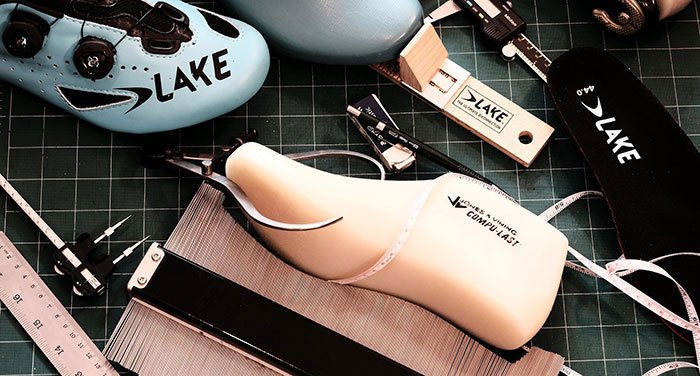
Refer to our sizing blog article here for the best way to measure your feet.
Timing Your Measurement and Accounting for Foot Swell
Feet swell through the day and expand further when they get hot, which is exactly what happens inside a cycling shoe on a long ride. Measure in the late afternoon or after a ride, not first thing in the morning. If you are between sizes, go with the larger foot and the later measurement, and leave a few millimetres of clearance at the toe rather than pressing against the front of the shoe.
Reading a Cycling Shoe Size Chart Correctly
A cycling shoe size chart converts your measured length into a nominal size, but it does not account for width, and it varies between brands. Read the chart as a starting point, then check the brand's own width guidance before you commit. Two shoes marked the same size can differ noticeably in forefoot volume.
EU, UK and US Conversions and Brand Differences
Conversions between EU, UK and US sizing are approximate at best, so always work from the EU size and your measured length where a brand publishes both. Some brands, including Lake, publish detailed fit data and even a dedicated fit tool to match your measurements to the right last. Where a brand offers a specific wide fit, that is a different last from the standard shoe, not simply a bigger size.
Measurement | What to Record | Why It Matters |
|---|---|---|
Foot length | Heel to longest toe in mm | Sets your base size |
Foot width | Across the ball in mm | Determines standard vs wide fit |
Time of day | Late afternoon preferred | Accounts for natural swelling |
Sock type | The socks you ride in | Changes effective volume |
Larger foot | Use this for sizing | Prevents one-foot pinch |
Signs Your Cycling Shoes Are Too Narrow
Numbness, tingling or a burning sensation across the ball of the foot is the clearest sign your cycling shoes are too narrow. These symptoms usually appear within the first hour and ease when you loosen the closure or step off the bike. Ignoring them leads to hot spots, blisters and, over time, a genuinely miserable ride.
Other warning signs worth watching for:
- Toes that feel cramped even with the dial or straps fully slackened
- Visible bulging of the upper over the widest part of your foot
- A heel that lifts because you have sized up to gain forefoot room
- Red pressure marks on the outside of the foot after a ride
If you have bunions or a wide forefoot from a condition such as Morton's toe, standard shoes will keep pressing on the same spot no matter how much you loosen them. That is the point at which a wide-fit last stops being a nice-to-have.
Wide Cycling Shoes vs Sizing Up: What Actually Works
Sizing up adds length, not width, so it rarely solves a narrow-fit problem and often creates a new one. A larger shoe gives you more forefoot room only by moving your foot forward, which shifts the cleat position and lets the heel slip. The fix is a shoe built on a wider last, where the extra volume sits across the ball of the foot rather than at the toe.
Wide cycling shoes keep your heel locked and your arch supported while opening up the forefoot, so you get pressure relief without sacrificing pedalling efficiency. Sizing up is a workaround. A wide-fit last is the actual solution. The one exception is a rider with a genuinely long, narrow foot, where the standard last is fine and length is the only variable.
Lake CX201 Road Cycling Shoes →
Choosing Wide-Fit Cycling Shoes for Road, Touring and MTB
Match the shoe to your riding, then match the last to your foot. A road shoe prioritises a stiff sole and a secure closure for power transfer, while a touring or mountain bike shoe trades some stiffness for walkability and a more forgiving upper. In every category, look for a brand that publishes width options and fit guidance rather than one nominal size.
Lake is a strong example of a brand that takes wide fit seriously, offering models built on wider lasts and a fit tool to match your measurements to the right shoe. Their range includes wide-fit road options and comfort-focused lasts with a generous forefoot platform, which suits riders who have struggled with standard sizing. You can explore the Lake Shoe Fit Tool to see how your own measurements map to their lasts.

Fit Checks Before You Buy Online
Ordering online is fine if you know what to check when the box arrives. Try shoes on late in the day with your riding socks, and follow this sequence:
- Confirm your longest toe has a few millimetres of clearance without pressing the front
- Check the widest part of your foot is not bulging over the sole edge
- Tighten the closure fully and confirm no pressure point across the top of the foot
- Stand and pedal on the spot to check the heel stays locked
- Walk a few steps (for touring and MTB shoes) to check for rubbing
- Wear them indoors for 20 minutes before deciding
If a shoe fails the width check, a different size of the same model will not fix it. Ask about the wide-fit version or a different last instead. Our team is happy to talk through your measurements before you order, and free delivery on all UK orders means you can get the right shoe in your hands to check.
Conclusion
The real challenge with wide feet is not finding a bigger number, it is finding a shoe built on the right last for your foot shape. Measure both feet late in the day, record length and width in millimetres, read the size chart as a starting point, and choose a genuine wide fit over a size up.
At Salt Dog Cycling, we are cyclists ourselves, and we would rather help you get the fit right first time than have you send shoes back. Talk to our team about your measurements, use the fit tool to narrow down your options, and create an account to keep track of your orders and sizing notes. Get started with Salt Dog Cycling and ride in comfort from the first mile.
Frequently Asked Questions
How should cycling shoes fit if you have wide feet?
A wide-fit cycling shoe should hold your heel firmly without pinching across the ball of your foot. You want roughly 5-10mm of space ahead of your longest toe and no pressure on the outside edge when you push off. If your little toe bulges against the upper or you feel numbness after 30 minutes, the shoe is too narrow. Getting the cycling shoe sizing right means checking width first, then length, rather than simply going up a size.
Should I size up in cycling shoes for wide feet?
Sizing up rarely solves width problems. A larger size adds length, not volume across the forefoot, so your heel lifts and you get hot spots while your toes stay cramped. A dedicated wide-fit model built on a wider last gives room where you need it without extra length. Only size up if your measured length genuinely falls between sizes, and use a proper cycling shoe size chart rather than guessing.
How do I measure my feet for cycling shoes?
Stand on a sheet of paper in the evening, when feet are at their largest, and trace around each foot with a pencil held vertically. Measure from heel to longest toe for length, then across the widest part of the forefoot for width. Measure both feet and use the larger figures. Compare your numbers against the brand's own cycling shoe size chart, since conversions between EU and UK sizes vary between makers.
How much toe room should cycling shoes have?
Aim for about 5-10mm between your longest toe and the end of the shoe when you are standing, not sitting. Cycling shoes should feel snug around the heel and midfoot but never compress the toes. With the shoe done up, you should be able to wiggle your toes freely. Toe room matters more on long rides, when feet swell, so check fit late in the day and after a ride rather than first thing in the morning.
What is the difference between wide-fit and standard cycling shoes?
Wide-fit cycling shoes are built on a wider last, which is the mould the shoe is shaped around. That extra volume sits across the forefoot and toe box, so the upper does not press on the outside of your foot. Standard shoes assume an average width and simply get longer as sizes increase. If standard shoes leave your feet numb or your little toe rubbing, a wide-fit model is the fix, not a bigger standard size.
Can cycling shoes be stretched to fit wide feet?
Some leather and microfibre uppers can be eased slightly by a cobbler, but the gain is small, often just a few millimetres, and it will not fix a shoe that is genuinely too narrow. Carbon-soled performance shoes with stiff synthetic uppers resist stretching almost entirely. If your cycling shoes' too-narrow fit is causing numbness or rubbing, replacing them with a wide-fit model is far more reliable than trying to stretch them.
Do cycling shoe sizes vary between brands?
Yes, noticeably. A UK 9 in one brand can feel like a UK 8.5 in another, and EU-to-UK conversions are not standardised across makers. Width labelling also differs: one brand's wide fit may match another's standard. Always check the specific brand's cycling shoe size chart and, where offered, use a fit tool or speak to a retailer who knows the lasts. Measuring your feet first gives you a fixed reference point to compare against.

Copyright 2026 Salt Dog Cycling. All Rights Reserved. Sitemap |