Loading... Please wait...





- Cycling Shoes
- Cycling Clothing
- Bike Parts
- Cassettes
- Pedals
- Cleats and Accessories
- Bike Chains
- Mudguards
- Saddles
- Seatposts
- Road Handlebars
- Handlebar Tape
- Handlebar Grips
- Bike Stems
- Inner Tubes
- Puncture Repair
- Bike Cables
- Road Wheelsets
- Brakes
- Mountain Bike Forks
- Bottom Brackets
- Bike Care and Maintenance
- Track Pumps
- Bike Tools
- Cycling Multi-Tools
- Mini Pumps and Co2
- Bike Tyres
- Cycling Helmets
- Cycling Accessories
- Car Bike Racks
- Turbo Trainers
- Bike Boxes
- Road Bikes
- Orro Parts and Accessories
- Kids Bikes
- Children's Bicycle Seats
- SALE
Should You Size Up in Cycling Shoes?
Posted on 4th Oct 2026
Table of Contents
- Why Cycling Shoe Sizing Matters
- How to Measure Your Feet for Cycling Shoes
- Signs Your Cycling Shoes Are Too Small
- Common Cycling Foot Pain Causes and What They Mean
- How to Break In New Cycling Shoes Properly
- Wide Fit Options for Better Comfort
- Getting the Right Fit First Time
- Frequently Asked Questions
Last Updated: 2 October 2026
Why Cycling Shoe Sizing Matters
Getting the right fit in cycling shoes is one of those decisions that feels simple but genuinely changes your riding experience. Too tight and you'll spend hours battling numb toes. Too loose and your foot slides around, killing your power transfer and leaving you with blisters. The question of whether you should size up cycling shoes isn't just about comfort, it's about performance and preventing the foot pain that derails so many cyclists.
The reason it's confusing is that cycling shoes don't follow standard shoe sizing. A road cycling shoe in a size 42 won't fit the same as a street shoe in size 42. Add in the fact that different brands have wildly different lasts (the mould they use to shape the shoe), and suddenly you're staring at three different sizes in your online basket wondering which one to pick.
The stakes matter because a poor fit doesn't just feel uncomfortable, it can cause lasting problems. We'll walk you through exactly how to measure your feet, spot the warning signs that your shoes are too small, and figure out whether sizing up is the right move for you.
How to Measure Your Feet for Cycling Shoes
The most reliable way to find your cycling shoe size is to follow these blog instruction https://www.saltdogcycling.com/how-to-measure-feet-for-cycling-shoes/. This takes five minutes and eliminates most of the guesswork.
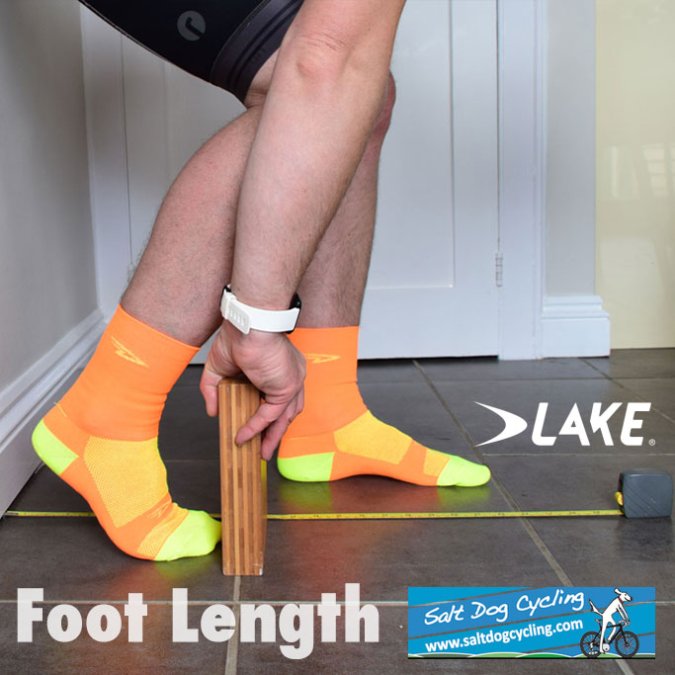
Once you have your measurements, you can cross-reference them against a brand's size chart. Most cycling shoe manufacturers publish detailed conversion tables showing European sizes, UK sizes, and foot length in centimetres. This is far more reliable than trying to guess based on your street shoe size.
If you're shopping with Salt Dog Cycling, we've made this even easier. You can use the Lake Shoe Fit Tool to find your perfect Lake cycling shoe size based on your foot measurements. The tool accounts for the specific last and fit of each model, which matters because even within the same brand, different shoe models can fit differently.
A common mistake is measuring your feet in the evening after a day of riding or activity. Your feet swell throughout the day, so measure them in the morning or early afternoon for the most accurate result.
Signs Your Cycling Shoes Are Too Small
Tight cycling shoes create specific problems that you'll recognise if you've experienced them. The most obvious signal is numbness or tingling in your toes during or after a ride. This usually starts in the outer toes and can progress to your whole foot feeling numb.
Other warning signs include:
- Pain across the top of your foot that eases when you loosen the straps
- Your toes feeling compressed or cramped, especially at the ends
- Blisters forming on the sides of your feet or on your toes
- A burning sensation in the ball of your foot
- Your foot going completely numb after 30-45 minutes of riding, then taking 10-15 minutes to "wake up" after you stop
If you're experiencing any of these, your shoes are almost certainly too small. The problem is that cycling shoes need to be snug, they're not meant to be loose like casual trainers. But there's a difference between snug and painful.
The fit should feel firm around your midfoot and heel, with just enough room in the toe box that you can wiggle your toes slightly. You shouldn't feel pressure points, and your toes shouldn't be touching the end of the shoe when you're clipped in and pedalling.
Common Cycling Foot Pain Causes and What They Mean
Not all foot pain in cycling shoes means the shoes are too small.
Numbness in the outer toes usually points to compression across the top of the foot or pressure from the sides. This often means the shoe is too narrow or too small overall.
Pain at the back of your heel suggests the shoe is too large or your heel is slipping. This is the opposite problem, sizing up would make it worse.
Burning sensation across the entire foot often indicates the shoe is too tight overall, restricting blood flow. This is a strong signal that sizing up or switching to a wider model would help.
Blisters on specific pressure points mean the shoe is rubbing in that spot. Sometimes this is a break-in issue that resolves after 5-10 rides.
The key insight is that not every foot pain problem is solved by sizing up.
Lake MX177 Wide Fit Mountain Bike Shoes →
How to Break In New Cycling Shoes Properly
New cycling shoes need a proper break-in period. Even if you've sized correctly, they'll feel stiff and uncomfortable for the first few rides. This is normal and doesn't mean you've chosen the wrong size.
Here's how to break them in:
- Rides 1-3: Wear them for short, easy rides of 30-45 minutes. Don't do intense efforts or long climbs yet
- Rides 4-6: Increase to 60-90 minute rides at moderate intensity
- Rides 7-10: You can start doing longer rides and harder efforts, but still keep an eye on any developing hot spots
- After 10 rides: The shoes should feel broken in and comfortable for any type of riding
During the break-in period, pay attention to how they feel. Some stiffness and a slightly snug feel is expected. But if you're getting numbness or sharp pain, that's a signal the size is wrong, not just that they need breaking in.
A practical tip: if you're breaking in new shoes and they're causing discomfort, wear them for a short ride, then take them off and let your feet recover before your next ride. Don't do back-to-back long rides in brand new shoes while you're still figuring out the fit.
Wide Fit Options for Better Comfort
If you've measured your feet carefully and you're between sizes, or if your feet are naturally wider, a wide-fit cycling shoe is often the better choice than sizing up in a standard model.
Sizing up in a standard shoe doesn't just give you extra length, it also gives you extra width and volume throughout the shoe. This can leave your heel loose, which causes sliding and blisters. A proper wide-fit shoe is designed with a wider forefoot and midfoot while maintaining a snug heel, which gives you the room you need without the downsides.
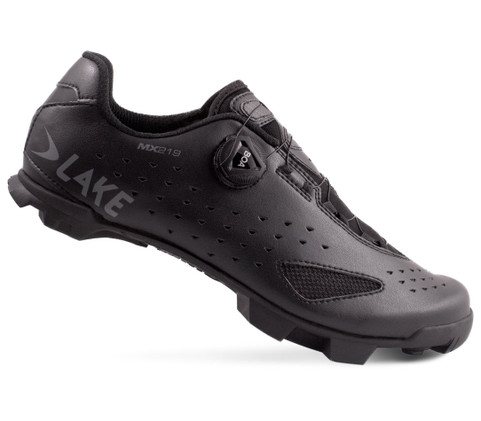
Salt Dog Cycling stocks several wide-fit options for cyclists who need them. The Lake MX177 Wide Fit Mountain Bike Shoes, Lake MX219 Wide Fit Mountain Bike Shoes, Lake MX21G Wide Fit Mountain Bike Shoes, and Lake MX239 Wide Fit Mountain Bike Shoes are all designed specifically for wider feet. These shoes maintain the performance and stiffness of standard models but give your foot room to breathe.


Wide-fit shoes are worth considering if:
- Your street shoe size is a wide fitting
- You have bunions or other structural width issues
- You've tried standard sizing and felt compressed across the midfoot
- Your toes feel cramped even when the shoe isn't tight overall
The advantage of choosing a proper wide-fit model over just sizing up is that you get the right volume in the right places. Your heel stays secure, your arch gets proper support, and your forefoot has the space it needs.
Getting the Right Fit First Time
The approach to how to size up cycling shoes should be methodical rather than guesswork. Start by measuring your feet accurately. Use a brand's size chart and fit tool if available.
When you do order new cycling shoes, try them on indoors first. Clip into your pedals in your kitchen or garage for a few minutes to get a feel for how they fit under load.
If you're worried about fit and you've got specific foot conditions like bunions or you're doing long-distance touring and need shoes you can absolutely rely on, the team at Salt Dog Cycling can help. You can talk through your foot shape, your riding style, and any concerns you have. The Lake Shoe Fit Tool takes the guesswork out of sizing, and our team can advise on whether a standard fit or wide-fit model is right for you.
The goal is to find shoes that feel firm and secure without being painful or restrictive. You should be able to wiggle your toes, feel no pressure points, and have no numbness during or after your rides.
Finding the right cycling shoe fit transforms how you feel on the bike. Foot pain and numbness aren't something you have to accept, they're usually a sign that your shoes don't match your feet.
Frequently Asked Questions
Should I buy cycling shoes in my normal trainer size?
Not necessarily. Cycling shoes fit differently from trainers because they're designed for pedalling efficiency rather than everyday walking. Your cycling shoe size may be a half or full size smaller than your trainer size. Always measure your feet properly and check the manufacturer's size guide before ordering. Using our Lake Shoe Fit Tool can help you find the exact size that matches your foot measurements.
How much room should be in the toe box of cycling shoes?
Your toe box should feel snug but not cramped. You want roughly 5mm of space between your longest toe and the shoe's end—about the thickness of a credit card. This prevents your toes from pressing against the front during rides while ensuring your foot doesn't slide around inside the shoe, which causes discomfort and reduces power transfer to the pedals.
Do cycling shoes stretch over time?
Most cycling shoes stretch slightly after breaking in, particularly in the width and toe box. Expect minimal stretching—typically less than half a size. If your shoes feel uncomfortably tight initially, they may loosen up, but don't rely on this alone. Proper sizing from the start prevents painful break-in periods and ensures consistent fit throughout the shoe's life.
What should I do if my cycling shoes arrive and don't fit?
The Salt Dog Cycling team can help you troubleshoot fit issues before you decide to return anything. Ring us on +44 (0)1332 739747 or get in touch through our website. We can advise on whether sizing up, trying a different model, or using wide-fit options might solve the problem, and we'll support you through the process.

Copyright 2026 Salt Dog Cycling. All Rights Reserved. Sitemap |