Loading... Please wait...





- Cycling Shoes
- Cycling Clothing
- Bike Parts
- Cassettes
- Pedals
- Cleats and Accessories
- Bike Chains
- Mudguards
- Saddles
- Seatposts
- Road Handlebars
- Handlebar Tape
- Handlebar Grips
- Bike Stems
- Inner Tubes
- Puncture Repair
- Bike Cables
- Road Wheelsets
- Brakes
- Mountain Bike Forks
- Bottom Brackets
- Bike Care and Maintenance
- Track Pumps
- Bike Tools
- Cycling Multi-Tools
- Mini Pumps and Co2
- Bike Tyres
- Cycling Helmets
- Cycling Accessories
- Car Bike Racks
- Turbo Trainers
- Bike Boxes
- Road Bikes
- Orro Parts and Accessories
- Kids Bikes
- Children's Bicycle Seats
- SALE
Blog - how to adjust cycling cleats
How to Stop Foot Numbness While Cycling
Posted on 4th Oct 2026
Table of Contents
- Why Your Feet Go Numb When Cycling
- How to Adjust Cycling Cleats for Better Comfort
- Cycling Shoe Fit Guide: Getting the Right Size and Closure
- Best Cycling Insoles for Arch Support
- Immediate Steps to Relieve Foot Numbness on the Bike
- When to Seek Professional Bike Fitting Help
- Frequently Asked Questions
Last Updated: October 4, 2026
Why Your Feet Go Numb When Cycling
Learning how to stop foot numbness while cycling starts with understanding that it stems from pressure on specific nerves in your foot, combined with shoe fit issues and cleat positioning.
Any pressure point, from a tight strap, poor arch support, or misaligned cleats, can compress the nerves that run through your forefoot, worsening over time.
This is entirely preventable. Most cyclists who experience numbness have never adjusted their setup properly.
Pressure on the metatarsal nerves
The metatarsal nerves run across the ball of your foot. When your shoe is too tight or your foot position forces weight onto these nerves, they compress, causing tingling or numbness across your toes or front of foot.
Cycling shoes are rigid by design for power transfer, but this rigidity becomes problematic if the shoe doesn't match your foot shape or straps are overtightened.
Pressure usually increases over time, your first 30 minutes may feel fine, but numbness often creeps in by hour two or three, signalling a setup adjustment is needed.
Shoe fit and closure issues
A cycling shoe that's too narrow or tight restricts blood flow and triggers numbness. Many cyclists buy shoes based on road shoe sizing, which runs small, or don't account for actual riding socks.
Straps or dials that sit over the widest part of your foot create a pressure band that cuts off circulation if overtightened.
Your foot swells during a ride as blood flow increases and muscles warm up. A shoe that fits perfectly at the start may feel constrictive after 20 minutes.
Cleat position and foot alignment
Cleats positioned too far forward or back force your foot into an unnatural angle, changing pressure distribution and compressing nerves.
Cleats rotated incorrectly force your foot against its natural alignment, building tension that triggers numbness.
Your cleat position should match your individual foot anatomy, not a generic template, many cyclists never adjust after initial setup.
How to Adjust Cycling Cleats for Better Comfort
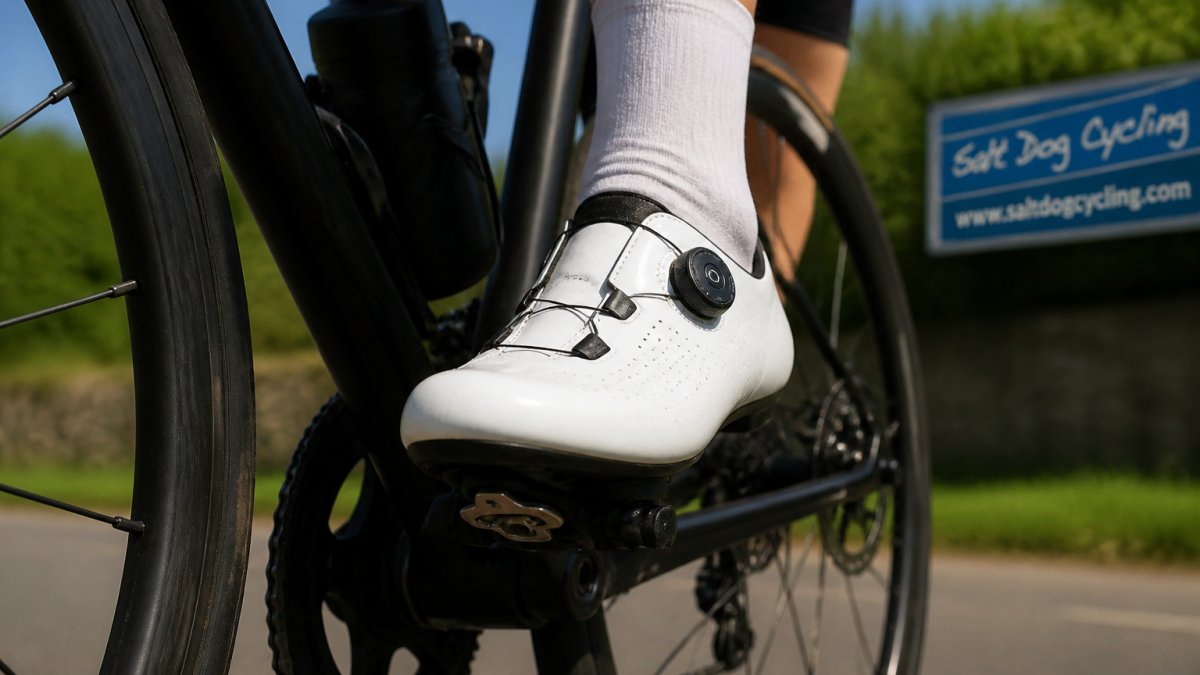
Cleat adjustment is one of the most overlooked fixes for foot numbness. Small changes in cleat position can eliminate numbness entirely, and the process is straightforward once you know what you're doing.
Finding your natural foot position
Identify your natural foot position by standing barefoot and letting your foot settle. Most feet point slightly outward, not straight ahead.
If cleats are installed straight ahead, you're forcing your foot into an unnatural angle, creating tension and numbness.
Stand on one leg and let your other foot hang loose to find your natural angle, this is your starting point for cleat rotation.
Forward and back adjustment
Cleat position along the shoe's length affects pressure concentration. Too far forward concentrates pressure on the metatarsal nerves; too far back reduces power transfer.
Position your cleat so the ball of your foot sits directly over the pedal axle, the neutral position where most cyclists feel comfortable.
To adjust:
- Loosen your cleat bolts slightly (don't remove them fully)
- Move the cleat forward or backward in small increments, 2-3 millimetres at a time
- Tighten and test on a short ride
- Repeat until numbness improves
Move your cleat 2mm at a time, ride for 10 minutes, and assess before adjusting again.
Rotation and float settings
Cleat rotation is the angle your cleat points relative to your shoe's length. Misalignment with your natural foot angle creates constant tension.
Adjust rotation to match your natural foot angle, then tighten and test.
Float is the side-to-side movement your foot can make whilst clipped in. Limited float combined with misaligned cleat angle creates tension and numbness.
Consider upgrading to cleats with adjustable float to give your foot room to find its natural angle during the pedal stroke.
Cycling Shoe Fit Guide: Getting the Right Size and Closure
A shoe that fits properly is your foundation. No amount of cleat adjustment will fix numbness caused by a shoe that's too tight or too narrow.
Measuring for correct shoe length
Cycling shoes should fit snugly with about a thumb's width of space at the end of your longest toe. Measure your foot length whilst wearing your actual riding socks.
Road shoe sizing runs small. If you're between sizes, go up, your foot swells during rides, and a slightly loose shoe is better than one that's tight.
Your foot shouldn't slide forward into the toe box; if it does, the shoe is too long.
Heel cup fit and midfoot support
The heel cup holds your foot stable. A loose cup lets your foot slide, creating pressure points; a tight cup restricts blood flow.
Your heel should sit snugly in the cup without feeling squeezed, it shouldn't move more than 5 millimetres when pressed.
Midfoot support, the area under your arch and across the widest part of your foot, is equally important. Poor support triggers numbness and fatigue.
Look for shoes with structured midfoot support or add insoles for extra support.
Strap and closure tension
Most numbness problems start with strap tension. Straps that are too tight compress nerves; too loose lets your foot slide.
Correct tension is firm enough to keep your foot stable but loose enough to slip a finger under the strap.
G8 Performance 2620 Pro Series Insoles →
Pay special attention to straps over the ball of your foot, they create a pressure band easily over-tightened. Loosen them slightly.
During a ride, loosen your straps as your foot swells. Loosening them after 20-30 minutes can eliminate numbness entirely.
Best Cycling Insoles for Arch Support
Quality insoles support your arch, reduce pressure on the metatarsal nerves, and improve power transfer. They're your quickest fix for poor arch support.
Custom-adjustable insoles for flexibility
The G8 Performance 2620 Pro Series Insoles offer five arch heights and eleven position options, letting you dial in exact support for your foot.

They include a built-in metatarsal pad that reduces pressure on the metatarsal nerves and prevents numbness, whilst remaining thin and lightweight.
Adjustability lets you start with lower arch support and gradually increase it as your foot adapts.
Mouldable insoles for personalised fit
The Lake Carbon Fibre Mouldable Insoles are heated and moulded to your foot's exact shape, using carbon fibre laminate for support and wicking textile for moisture management.
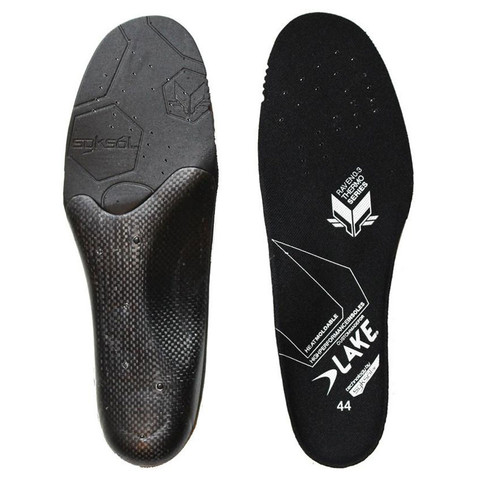
They conform to your foot's unique contours, providing support exactly where you need it, and are compatible with most cycling shoes.
Once moulded, they're permanent and can't be adjusted, but the custom fit is worth the effort.
Arch height selection
Too little arch support causes foot collapse and nerve pressure; too much creates cramping and discomfort.
Stand with wet feet on brown paper to see your arch shape, high arch shows a narrow band, medium arch shows a moderate curve, low arch shows a wide imprint.
The Currex BikePro Insoles come in three arch heights and are extra slim, designed specifically for cycling shoes without adding bulk.

Start with the arch height matching your foot shape. Most cyclists find relief within one size change.
Immediate Steps to Relieve Foot Numbness on the Bike
If you're experiencing numbness during a ride, these temporary fixes will help you finish comfortably.
Loosening straps during rides
Unclip one foot, loosen the strap or dial by one or two clicks, and clip back in for immediate relief.
Do this every 20-30 minutes on longer rides to account for foot swelling.
Loosen straps gradually, one or two clicks at a time, to maintain stability whilst relieving pressure.
Changing foot position on the pedals
Move your foot slightly forward or backward on the pedal to shift pressure away from numbness, even 5mm can help.
Rotating your foot slightly inward or outward changes weight distribution and relieves pressure on the metatarsal nerves.
These adjustments are temporary; focus on permanent fixes once you're home.
Taking breaks and massage
Stop every hour, remove your shoes, and massage the ball of your foot with your thumbs to increase blood flow and reduce numbness.
Flex your toes and rotate your feet in circles to improve circulation.
Five minutes of massage and movement can restore sensation; take these breaks regularly on long rides.
When to Seek Professional Bike Fitting Help
If you're still struggling with how to stop foot numbness while cycling after adjustments, a bike fitter can assess your setup and identify issues you might miss.
A professional bike fit (60-90 minutes) examines cleat position, shoe fit, saddle height, and body position whilst identifying movement patterns that cause numbness.
A single professional fit often eliminates years of discomfort and is worth the investment if you ride regularly.
Start with the adjustments in this guide; if they don't work, book a session through local cycling shops or online directories.
The process is straightforward: adjust your cleats to match your foot angle, ensure your shoes fit properly, add arch support with quality insoles, and loosen your straps during rides. These steps solve foot numbness for most cyclists.
At Salt Dog Cycling, we stock a full range of cycling insoles and can guide you through the fitting process. Create an account and get in touch, we'll help you find the setup that works for your feet.
Frequently Asked Questions
Why do my feet go numb when cycling?
Foot numbness whilst cycling typically results from pressure on the nerves that run through your foot, particularly the metatarsal nerves. This pressure often comes from shoes that are too tight across the ball of the foot, improper cleat positioning, or inadequate arch support. Poor bike fit can also contribute, as can excessive pressure from tight straps or closures. The numbness usually indicates your foot isn't getting enough blood flow or the nerves are being compressed.
How should cycling shoes fit to prevent numbness?
Cycling shoes should fit snugly around the heel and midfoot without being tight across the ball of your foot. There should be roughly a thumb's width of space at the toe end. Your heel should not slip when unclipped. Straps should be firm enough to hold your foot in place but loose enough that you can fit a finger underneath. If shoes feel tight across the forefoot, they're likely too narrow or too small, which directly causes numbness by compressing nerves.
Does cleat position affect foot numbness?
Yes, cleat position significantly affects foot numbness. If cleats are positioned too far forward or back relative to your natural foot position, they alter how your weight distributes across the pedal and shoe. This misalignment increases pressure on specific nerves. Cleats should align with the ball of your foot, roughly where your metatarsal heads sit. Even small adjustments of a few millimetres can relieve numbness by distributing pressure more evenly across your foot.
Are insoles necessary for cycling comfort?
Insoles aren't essential for everyone, but they're highly beneficial if you experience numbness or have arch support issues. Quality cycling insoles provide cushioning under the metatarsal bones, support your arch, and improve blood flow by reducing pressure points. Custom-adjustable or mouldable insoles allow you to personalise support to your foot shape. Many cyclists find that switching to proper cycling insoles eliminates numbness that shoe adjustments alone couldn't fix.

Copyright 2026 Salt Dog Cycling. All Rights Reserved. Sitemap |