Loading... Please wait...





- Cycling Shoes
- Cycling Clothing
- Bike Parts
- Cassettes
- Pedals
- Cleats and Accessories
- Bike Chains
- Mudguards
- Saddles
- Seatposts
- Road Handlebars
- Handlebar Tape
- Handlebar Grips
- Bike Stems
- Inner Tubes
- Puncture Repair
- Bike Cables
- Road Wheelsets
- Brakes
- Mountain Bike Forks
- Bottom Brackets
- Bike Care and Maintenance
- Track Pumps
- Bike Tools
- Cycling Multi-Tools
- Mini Pumps and Co2
- Bike Tyres
- Cycling Helmets
- Cycling Accessories
- Car Bike Racks
- Turbo Trainers
- Bike Boxes
- Road Bikes
- Orro Parts and Accessories
- Kids Bikes
- Children's Bicycle Seats
- SALE
Can Cycling Shoes Cause Foot Pain? Fixes That Work
Posted on 7th Oct 2026
Table of Contents
- Can Cycling Shoes Cause Foot Pain? What Riders Get Wrong
- How Should Cycling Shoes Fit? A Check You Can Do in Five Minutes
- Foot Pain From Cycling Cleats: Position, Float and Pressure
- Cycling Numb Toes: Why It Happens and What to Change
- How to Stop Feet Hurting When Cycling: Fixes That Actually Help
- Shoes for Bunions, Morton's and Wide Feet
- Conclusion: Sort the Fit, Then Enjoy the Ride
- Frequently Asked Questions
Last Updated: October 7, 2026
Can Cycling Shoes Cause Foot Pain? What Riders Get Wrong
Can cycling shoes cause foot pain? Yes, but the shoe is often only half the story. At Salt Dog Cycling, we see riders blame their footwear when the real culprit is fit, cleat position, or a mismatch between shoe shape and foot shape. This guide explains what causes the pain and how to fix it.
Most riders assume pain means the shoe is too small. That's rarely the whole truth.
A shoe that fits perfectly in the shop can still hurt on the bike. Pressure builds differently when you're clipped in for two hours. Your foot swells, your arch drops under load, and suddenly that "perfect" fit feels like a vice.
Below, we'll show you exactly how to diagnose the problem and fix it. We'll cover the usual suspects, the five-minute fit check, cleat setup, numb toes, and the insoles most riders overlook.
The Usual Suspects: Shoe-Related Causes
The most common shoe-related cause is a toe box that's too narrow or too short. Your foot spreads under power, and a tight shoe traps it.
Other frequent problems include:
- A heel that slips, forcing your toes to claw for grip
- A stiff upper that presses on the top of the foot
- A shoe that's the right length but the wrong width
- Worn or compressed footbeds that offer no arch support
Hot spots under the ball of the foot usually point to pressure, not size. A common mistake is sizing up when the real issue is width.
When the Shoe Is Not the Real Problem
Sometimes the shoe is innocent. The pain comes from somewhere else entirely.
Cleat position sits at the top of that list. A cleat set too far forward puts constant pressure on the ball of your foot. Set too far inward, and your knee tracks badly, which your foot then complains about.
Other non-shoe causes:
- Saddle height that's too high, making you point your toes
- A saddle too far forward, increasing pressure through the front of the foot
- Pedal float that's too restricted for your natural knee and foot angle
If both feet hurt in the same spot, suspect your setup. If only one foot hurts, suspect the shoe.
How Should Cycling Shoes Fit? A Check You Can Do in Five Minutes
A well-fitted cycling shoe holds your heel firmly while leaving room for your toes to spread. You should feel snug, not squeezed. Here's a quick check you can run before your next ride.
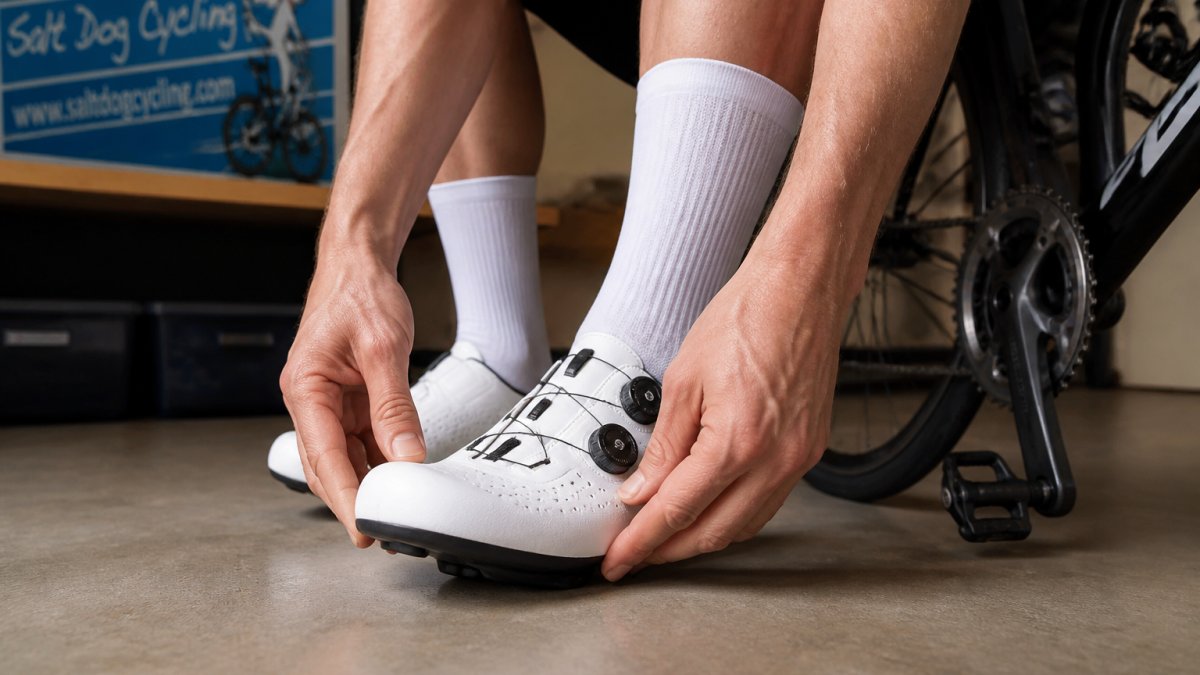
Put the shoes on with the socks you actually ride in. Then work through this Follow these instructions or get in contact with us to get the correct fit.
Room at the Front, Locked at the Heel
The golden rule is simple: room at the front, locked at the heel. A shoe that's tight at the toe and loose at the heel is the worst of both worlds.
Your heel needs to stay put so your foot doesn't slide forward on every downstroke. Your toes need space so they can spread and your blood can flow.
Many riders tighten the whole shoe to stop heel slip. That's the wrong fix. Tighten the mid-foot and heel instead, and leave the toe box alone.
Why Foot Shape Matters More Than Size
Two riders can wear the same size and need completely different shoes. Foot shape decides fit far more than the number on the box.
Consider these differences:
- Arch height: High arches need more support; flat feet need a wider, flatter base.
- Width: Some feet are wide at the ball, others narrow with a wide heel.
- Volume: A high instep needs a roomier upper; a low instep needs a snugger one.
- Toe splay: Some feet spread wide under load and need a wider toe box.
This is why we point riders to the Lake Shoe Fit Tool. It helps match shoe shape to your actual foot, not just a size number.
Foot Pain From Cycling Cleats: Position, Float and Pressure
Foot pain from cycling cleats usually traces back to cleat position or float. Get these two right and most ball-of-foot pain disappears.
Start with fore-aft position. Your cleat should sit just behind the ball of your foot, so the pedal axle lines up under the widest part. Move it forward and you load the toes. Move it back and you lose power.
Then check float. Float is how much your foot can rotate before the cleat stops it.
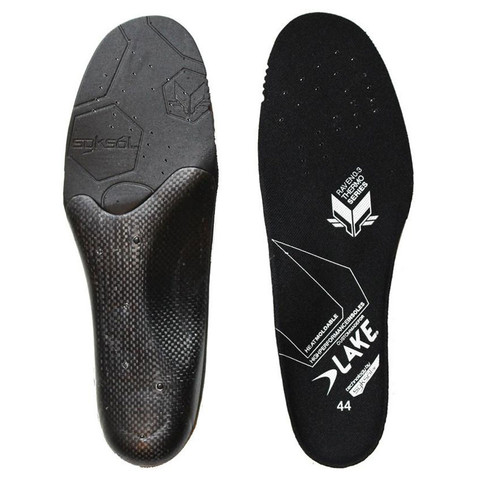
Lake Carbon Fibre Mouldable Insoles →
- Fixed cleats: No rotation. Great for sprinters, hard on knees and feet.
- Small float: A few degrees. Fine for most riders with a natural pedal stroke.
- Large float: More rotation. Best for riders with knee or hip issues.
If your feet twist awkwardly to unclip, your float is wrong. Adjust in small steps and test each change.
Cycling Numb Toes: Why It Happens and What to Change
Cycling numb toes happen when pressure or a tight shoe restricts blood flow and nerve signals. The fix is usually less pressure, not more padding.
Numbness that starts after 30 minutes and spreads across all toes points to a shoe that's too tight. Numbness on one side of the foot often points to a cleat that's angled wrong.
What to change, in order:
- Loosen the straps or dials over the top of the foot
- Check that your socks aren't too thick or creased
- Move the cleat slightly to relieve side pressure
- Add arch support so your foot stops collapsing under load
If numbness persists after these changes, get your position checked by a fitter. Persistent numbness isn't something to ride through.
How to Stop Feet Hurting When Cycling: Fixes That Actually Help
To stop feet hurting when cycling, work through fit, cleats, and support in that order. Most riders fix the problem without buying new shoes.
Here's how we'd approach it:
Problem | Likely Cause | Fix |
|---|---|---|
Hot spot under ball of foot | Cleat too far forward | Move cleat back |
Numb toes after 30 minutes | Shoe too tight | Loosen dials, check socks |
Heel slipping | Wrong size or shape | Resize or change shoe model |
Arch ache | No support | |
One-sided pain | Cleat angle | Adjust float and angle |
Work top to bottom. Change one thing at a time so you know what worked.
Insoles and Footbeds: The Most Overlooked Fix
Stock insoles are flat and thin. They offer almost no arch support, and that's where a lot of foot pain starts.
A good footbed supports your arch, spreads pressure, and holds your heel steady. We stock a few options that riders tell us make a real difference:
- Lake Carbon Fibre Mouldable Insoles reshape to your foot and fit most cycling shoes.
- Currex BikePro Insoles come in high, medium, and low arch profiles.
- G8 Performance 2620 Pro Series Insoles are fully adjustable and built to reduce numbness.
If your arch aches or your toes go numb, try a footbed before you buy new shoes.


Shoes for Bunions, Morton's and Wide Feet
Riders with bunions, Morton's neuroma, or wide feet need shoes built around foot shape. Standard cycling shoes often make these conditions worse.
For a bunion, look for a wide toe box and a soft upper that won't press on the joint. For Morton's neuroma, you want a wider forefoot and a metatarsal pad to lift and spread the bones.
For wide feet, forget sizing up. A longer shoe won't fix a narrow one. Look for brands that offer wide fits as standard.
A mouldable insole helps here too. It takes pressure off the hot spots and supports the arch so your foot stops collapsing inward.
If you're unsure which shoe suits your foot, talk to us. We're cyclists, and we'll help you match the shoe to your foot, not the other way round.
Conclusion: Sort the Fit, Then Enjoy the Ride
Foot pain on the bike is frustrating, but it's almost always fixable. Start with fit, then cleats, then support. Change one thing at a time and test as you go.
At Salt Dog Cycling, we're a family-run shop run by cyclists. We offer free delivery on all orders and personal advice from people who ride. If you're stuck, our team will help you pick the right shoe and footbed for your feet.
Create an account with us and get expert help choosing gear that keeps you comfortable mile after mile.
Frequently Asked Questions
Can cycling shoes cause foot pain?
Yes, they can. The most common culprits are shoes that are too narrow or too tight across the forefoot, cleats positioned poorly under the ball of the foot, and a lack of arch support in the standard footbed. Most cycling shoes are built on a narrow last, so riders with wider feet or bunions often feel pressure after 30 to 60 minutes. The good news is that fit, cleat position and a better insole solve most cases without buying a new pair.
How should cycling shoes fit?
You want a locked-in heel with roughly 5 to 10 mm of space between your longest toe and the front of the shoe. Your foot should not slide forward when you push hard, and the upper should feel snug across the midfoot without pinching. Test the fit at the end of the day when feet are largest, and always try shoes with the socks you actually ride in. If you can wiggle your toes but not slide your heel, the length is about right.
Can tight cycling shoes cause numb toes?
Yes. Numb toes usually come from pressure on the nerves and blood vessels running across the top of the foot. Over-tightened Boa dials or ratchet straps, a narrow toe box, or a shoe that is too small all restrict circulation. Loosen the upper slightly, check that the tongue is not creased, and make sure the cleat is not forcing your foot into an awkward angle. If numbness persists after these changes, see a healthcare professional.
How do I stop the balls of my feet hurting when cycling?
Start with cleat position. Move the cleat back slightly so the pedal spindle sits just behind the ball of your foot, which spreads load over a larger area. Then check your shoe volume: a footbed with metatarsal support, such as the G8 Performance 2620 Pro Series Insoles, cushions the ball of the foot and reduces pressure build-up. Finally, avoid over-tightening the forefoot strap, which compresses the very area that hurts.

Copyright 2026 Salt Dog Cycling. All Rights Reserved. Sitemap |