



Best Lights for Winter Road Cycling: 2026 Picks
Posted by Richard Sault on 22nd Nov 2026
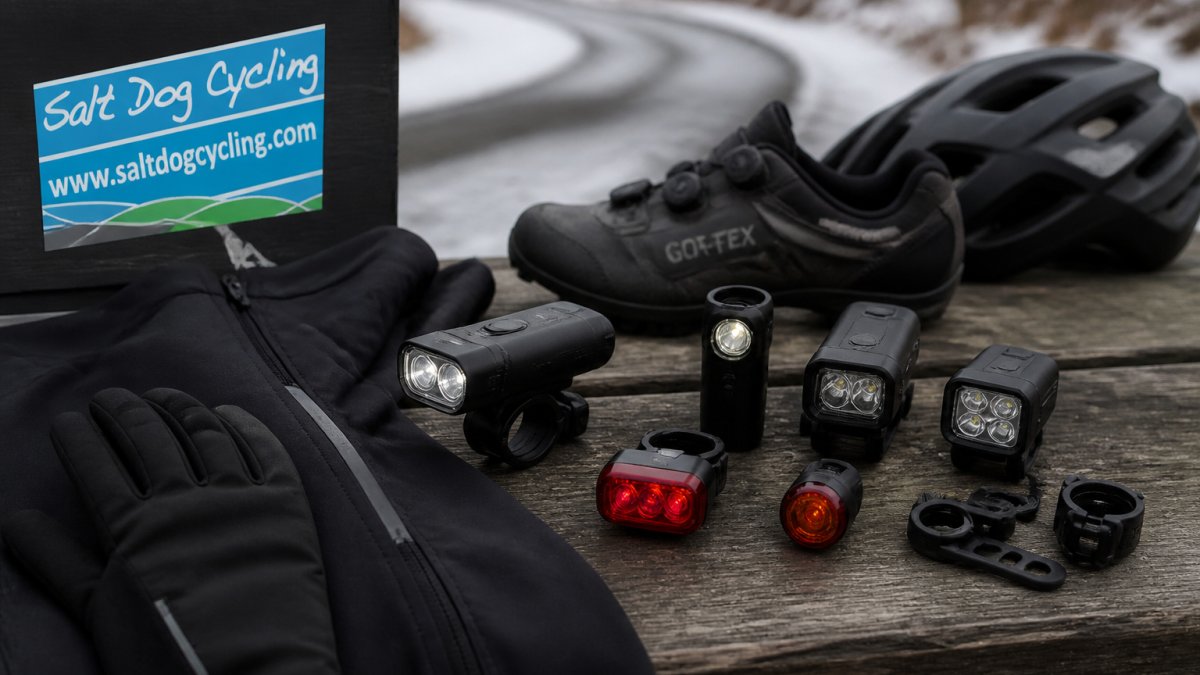
Table of Contents
- Why Winter Road Cycling Demands Better Lights
- Quick Comparison: Best Lights for Winter Road Cycling
- The Best Front Bike Lights for Road Cycling
- The Best Rear Bike Lights for Cycling in Low Light
- Bike Light Lumens Guide: How Much Output You Actually Need
- Bike Light Battery Life in Cold Weather: What to Expect
- What to Look For in Winter Cycling Lights
- Conclusion
- Frequently Asked Questions
Last Updated: 20 October 2026
Why Winter Road Cycling Demands Better Lights
Winter road cycling puts far more strain on your lighting than summer riding ever does. Gritters leave salt spray on the tarmac, lanes flood at the edges, and the sun sets before most of us leave work. Lights that felt fine in June often feel marginal by November.
At Salt Dog Cycling, we speak to riders every week who are piecing together a winter setup and aren't sure where to start. The honest answer is that the best lights for winter road cycling are the ones you'll actually keep charged, mount without swearing, and trust in the rain. That's the test we've applied to the picks below.
Below, we'll show you exactly what separates a light that copes with a winter commute from one that leaves you squinting into a hedge.
Quick Comparison: Best Lights for Winter Road Cycling
Here's the short version before we get into the detail. Every light here is IPX6 rated or better, rechargeable, and built for road use.
| Light | Output | Best For | Runtime (High) | Water Rating |
|---|---|---|---|---|
| Zefal Supervision F1500 | 1500 lm | Unlit lanes and fast descents | 1.5 hrs | IPX6 |
| Guee Sol 800 Plus | 250-800 lm (auto) | Changing light conditions | 2 hrs | Not stated |
| Zefal Supervision F800 | 800 lm | All-round road riding | 1.5 hrs | IPX6 |
| Gemini Duo 2200 | 2200 lm | Helmet and bar setups | 2 hrs | Not stated |
| Zefal Supervision R150 | 150 lm | Rear visibility in traffic | 3 hrs | IPX6 |
| Guee COB X | 25 lm | Lightweight backup | 4.5 hrs | IPX4 |
The Best Front Bike Lights for Road Cycling
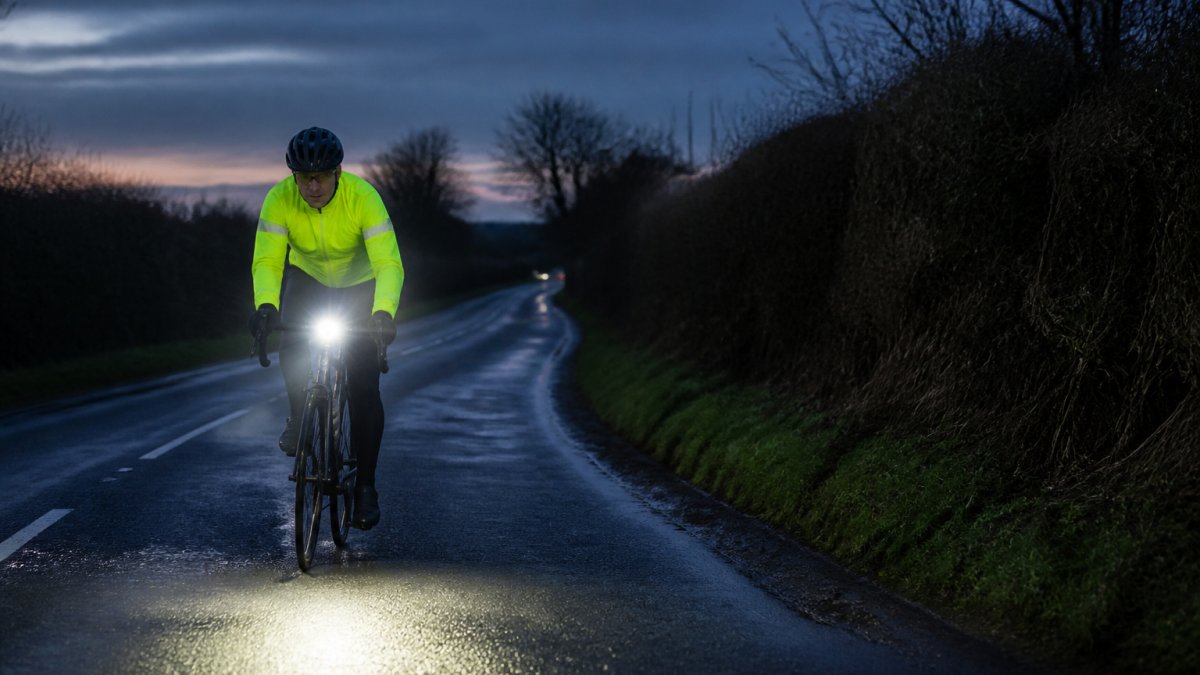
The best front bike lights for road cycling balance beam shape, runtime and mounting security. Raw output matters less than a clean cut-off that lights the road without dazzling oncoming drivers.
Zefal Supervision F1500: Maximum Reach for Unlit Lanes
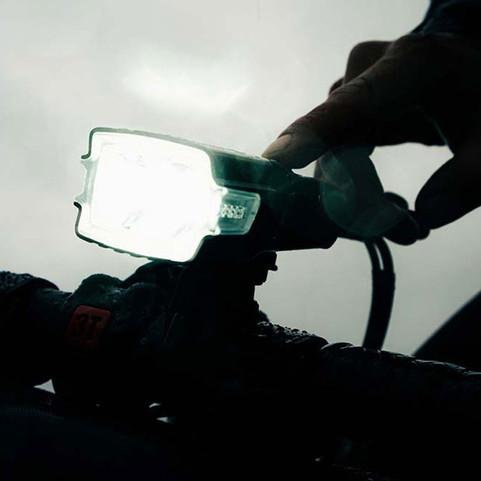
If your winter route includes unlit country lanes, this is the one we'd reach for. The dual-lens design throws a wider field of view than a single-lens unit, which matters when the verges disappear into darkness.
The machined aluminium case handles heat properly, and the mode and battery indicators mean you're never guessing. Five modes cover everything from a 19-hour low setting to a 65-hour flash. The remote button and GoPro interface come in the box, so bar and accessory mounting are sorted.
The trade-off is weight and price. At full power you get 1.5 hours, which is fine for a fast hour but not a full audax. Use medium for anything longer.
Guee Sol 800 Plus: The Ambient Sensor Pick
The smart ambient sensor here is genuinely useful in winter. Light levels swing constantly between tree cover, open fields and street lighting, and the Sol 800 Plus adjusts between 250, 400 and 800 lumens automatically.
The CNC-machined body uses Guee's own cooling design, and the tool-free bracket doubles as a GoPro mount. It's a strong touring choice. The catch: it charges via Micro-USB, and a full charge takes around six hours, so plan ahead.
Zefal Supervision F800: The Balanced All-Rounder
Most winter road riders don't need 1500 lumens. The F800 gives you 800 lumens in a lighter, simpler package, with the same IPX6 rating and machined aluminium casing as its bigger sibling.
Runtime is 16 hours on low, 4 hours on medium and 1.5 on high. The central button is easy to work through winter gloves, which sounds trivial until you're fumbling at a junction in the rain.
Gemini Duo 2200: For Riders Who Want a Remote and Helmet Mount
The Duo 2200 is the most flexible light here. The 30Wh two-cell battery gives 2 hours at full 2200 lumens, 4.5 hours at 1100 and 21 hours at 220. You can pair the wireless remote to more than one Gemini light and run bar and helmet together.
It ships with a helmet mount, head strap and handlebar mount, and the battery has a USB-C port you can use to top up a phone mid-ride.
The Best Rear Bike Lights for Cycling in Low Light
The best rear bike lights for cycling in low light do one job: make your position unmistakable to a driver approaching at speed. Brightness helps, but a wide viewing angle and a reliable flash pattern matter just as much.
The Zefal Supervision R150 is our pick for most riders. At 150 lumens with a wide angle of vision, it's visible in daylight as well as darkness, and the silicone strap plus interchangeable clip fits any frame or bag without tools. Five modes give you 16 hours on low flash and 3 hours on continuous high, with a two-hour charge via USB-C.

For a lighter, cheaper option, the Guee COB X weighs 27g and offers 160 degrees of visibility from a COB LED. It charges in 1 hour 40 minutes and runs 15 hours on flash. It's IPX4, so it is water resistant.
Zefal Supervision F1500 Front Light Rechargeable →
Bike Light Lumens Guide: How Much Output You Actually Need
A bike light lumens guide comes down to one question: what are you trying to see, and who needs to see you? More lumens isn't automatically better, and past a point you're just burning battery.
- 200-400 lumens: lit urban commuting and being seen. Enough for street-lit roads.
- 400-800 lumens: mixed routes with unlit sections. The sensible winter default.
- 800-1500 lumens: fast unlit lanes and descents where you need reach.
- 1500+ lumens: off-road, or riders who genuinely ride unlit roads at speed.
For rear lights, 25 to 150 lumens covers most road use. A 150-lumen rear is genuinely visible in daylight, which matters on grey winter afternoons.
What most guides miss is beam pattern. A 500-lumen light with a shaped cut-off beats a 1000-lumen floodlight that blinds drivers and wastes half its output in the trees.
Bike Light Battery Life in Cold Weather: What to Expect
Battery life in cold weather is the single biggest surprise for winter riders. Lithium batteries lose usable capacity as temperatures drop, so the runtime printed on the box is a laboratory figure, not a January figure.
In practice, expect a noticeable drop on the coldest rides, and plan your lighting around roughly two-thirds of the stated maximum. A light rated at 1.5 hours on high may give you closer to an hour in freezing conditions.
A few habits make a real difference:
- Store lights indoors and fit them just before you leave, not the night before in a cold shed.
- Charge at room temperature; charging a cold battery reduces its capacity over time.
- Carry a small backup rear light rather than relying on one unit.
- Recharge fully after every ride rather than letting cells sit depleted.
What to Look For in Winter Cycling Lights
When you're choosing winter cycling lights, work through these criteria in order. They'll narrow the field faster than comparing lumen figures.
- Water rating: IPX6 or better for road spray and heavy rain. IPX4 is a backup-light minimum, not a main-light standard.
- Mount security: a bracket that doesn't shift over potholes, and ideally tool-free so you can swap bikes.
- Runtime at usable output: check the medium setting, not just the headline maximum.
- Charging standard: USB-C is now the sensible baseline; Micro-USB means another cable to lose.
- Battery indicators: you need to know remaining charge before you set off, not mid-ride.
- Beam shape: a defined cut-off for road use, so you light the road without dazzling others.
- Spare mounting hardware: a second bracket for a winter bike saves constant swapping.
If you're unsure which output suits your routes, our team is always happy to talk it through before you buy. We're cyclists first, and we'd rather you left with the right light than the brightest one. And if your winter miles have you thinking about fresh footwear too, our Lake Shoe Fit Tool can help you dial in the right fit before you commit.
Conclusion
Winter riding asks a lot of your lighting, and the gap between a light that copes and one that doesn't shows up on the first dark, wet commute. Get the water rating, runtime and mount right, and the rest follows.
We stock the Zefal Supervision range alongside the Guee and Gemini options covered here, all chosen because we'd ride them ourselves. Free delivery applies to every order, and you can talk to our team directly for advice on pairing a front and rear setup for your routes.
Create an account with Salt Dog Cycling and get your winter lighting sorted before the clocks change.
Frequently Asked Questions
How many lumens do I need for winter road cycling?
For lit town and suburban roads, 200 to 400 lumens on a steady setting is enough to be seen without dazzling oncoming traffic. On unlit country lanes, aim for 800 lumens or more so you can spot potholes, gravel and standing water in time. The Zefal Supervision F1500 runs 1500 lumens on high, while the Guee Sol 800 Plus steps between 250, 400 and 800 lumens automatically. Match output to the road, not to the biggest number on the box.
Are flashing bike lights legal in the UK?
Yes, flashing lights are permitted on cycles in the UK provided they meet the relevant construction and use requirements, and the flash rate falls within the permitted range. In practice, most quality rear lights offer a flash mode that complies. A steady front light is still the safer choice on unlit lanes because it lets you see the road surface properly, while a flashing rear light helps drivers pick you out in traffic. Check the manufacturer's stated modes before relying on one.
How long should a bike light battery last in cold weather?
Expect noticeably less than the quoted run time once temperatures drop. Battery chemistry slows in the cold, so a light rated at 16 hours on low may deliver considerably less on a freezing morning. The Zefal Supervision F800 quotes 16 hours on continuous low and 1.5 hours on high, while the Supervision R150 quotes 16 hours on low and 3 hours on high. Charge at room temperature, carry a backup for long rides and never leave a depleted battery in a cold shed.
Do I need a different bike light for unlit roads?
Yes. A commuting light designed to be seen throws a narrow beam, which is fine in traffic but leaves you guessing on dark lanes. For unlit roads you want a wider beam and higher steady output, such as the dual-lens Zefal Supervision F1500 or the wide-beam Guee Sol 800 Plus. Look for a shaped beam that puts light on the road ahead rather than into the eyes of oncoming drivers.
Where should I position front and rear bike lights?
Mount the front light on the handlebar or a GoPro-style bracket so the beam hits the road ahead, and keep it below eye level to avoid dazzling drivers. Fit the rear light on the seatpost, saddlebag or frame where it stays visible and isn't blocked by a jacket or panniers. The Zefal Supervision R150 uses a silicone strap and clip for tool-free fitting, and the Guee COB X mounts vertically or horizontally on posts from 12mm to 35mm. Check both are still aimed correctly after loading up with winter layers.