



Which Mountain Bike Parts Last Longest in 2026?
Posted by Richard Sault on 22nd Nov 2026
Last Updated: November 2, 2026
Quick Summary
The longest-lasting mountain bike parts are those you can service and replace cheaply, with tyres, chains, brake pads and suspension seals wearing first. Prioritise puncture protection, coated chains, sintered pads and regular servicing, because durability is mostly maintenance rather than headline weight.
- Tyres typically last one to two seasons before tread and sidewall wear.
- Replace the chain before it stretches too far to protect the cassette and chainring.
- Sintered brake pads resist heat and wear better than organic pads in wet, gritty conditions.
- Service suspension lower legs every 50 hours and seals annually.
- Check chain stretch monthly or every 300 to 500 km.
Table of Contents
- How We Judge Durability in Mountain Bike Parts
- Durability Comparison at a Glance
- The Best Mountain Bike Tyres for Durability
- Building a Long-Lasting Mountain Bike Drivetrain
- Brakes, Suspension and Cockpit Parts That Take a Beating
- Protective and Repair Gear Worth Carrying
- Your Mountain Bike Maintenance Schedule
- How to Make Mountain Bike Parts Last Longer
- Frequently Asked Questions
How We Judge Durability in Mountain Bike Parts
Mountain bike parts durability is the measure of how long a component keeps working at its intended standard before wear, fatigue or impact forces it out of service. At Salt Dog Cycling, we judge the best mountain bike parts for durability in 2026 on four things: material quality, service life under real trail use, how easy a part is to maintain, and how readily spares are available when something finally wears out.
Grip and a long life are often in tension. A softer rubber compound bites harder in the wet but wears faster, while a harder compound lasts longer but gives up some traction. The right balance depends on your riding style, your terrain and how much you weigh.
Our Testing and Selection Criteria
We score every component against a simple framework: construction and materials, wear resistance, maintenance burden, compatibility and parts availability. A part that lasts but cannot be serviced or replaced cheaply is not truly durable in our view. Our picks favour parts that survive a full season of trail riding and can be repaired rather than replaced.
Durability Comparison at a Glance
The table below summarises the categories we cover and what actually matters most in each.
| Category | What Wears First | What to Prioritise | Typical Service Life |
|---|---|---|---|
| Tyres | Tread and sidewall | Puncture protection, compound | One to two seasons |
| Chain and drivetrain | Chain stretch, ring wear | Coating, pin strength | Regular replacement |
| Brakes | Pads and rotors | Pad compound, rotor material | Pads wear fastest |
| Suspension | Seals, bushings | Servicing, seal quality | Annual service |
| Cockpit | Grips, bar fatigue | Material, fit | Grips wear first |
The Best Mountain Bike Tyres for Durability
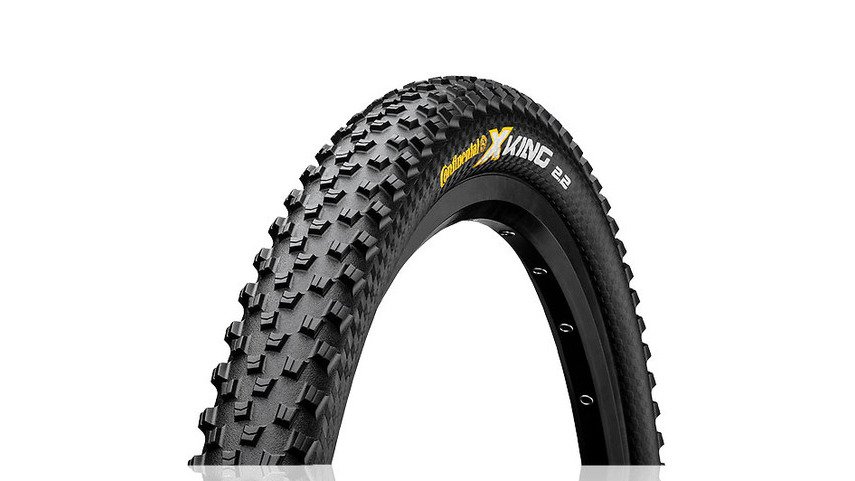
The best mountain bike tyres for durability balance a tough casing against a compound that resists wear without killing grip. Our pick is the Continental X-King 27.5 Inch MTB Tyre, which uses a Black Chili Compound for solid grip and self-cleaning, with shoulder lugs that hold stability in fast corners.

Puncture Protection and Grip Trade-offs
The X-King's Racesport (RS) version is built light yet strong, and its listing describes it as giving a decent amount of puncture protection for a race tyre.
Building a Long-Lasting Mountain Bike Drivetrain
A long-lasting mountain bike drivetrain starts with the chain, and the KMC X9 93 Bike Chain 9 Speed is built for exactly that. Its titanium nitride coating and mushroomed pins resist stretch, and it is compatible with Shimano, SRAM and Campagnolo nine-speed setups.

A dedicated chain link removing tool makes cleaning and swapping far easier when grit and old lube jam the master link.
Chains, Chainrings and Chain Retention
Chain wear drives most drivetrain cost. Replace the chain before it stretches too far and you protect the cassette and chainring.
Watch out: running a worn chain too long wears the cassette teeth, turning a cheap chain swap into a costly full drivetrain replacement.
Brakes, Suspension and Cockpit Parts That Take a Beating
Brakes, suspension and cockpit parts absorb the hardest hits, so stopping power, seal quality and fatigue resistance matter more than headline weight. This is where a durability-focused build diverges most from a race-focused one, and where the wrong specification quietly costs the most over a season.
Brakes: Pads, Rotors and Heat
Brake pads are the fastest-wearing part on most bikes. Sintered (metal) pads resist heat and wear better than organic pads in wet, gritty or long-descending conditions, but they can be noisier and bite harder on the rotor. Organic pads feel smoother and quieter but wear faster, especially in mud. A common pattern is that riders who descend a lot replace organic pads two or three times as often as sintered ones.
Rotors wear too. A rotor that has thinned below its minimum thickness, or has a visible lip at the edge of the braking track, will overheat and warp. Check rotor thickness with a calliper each time you fit new pads, and replace the rotor when it is under the manufacturer's minimum. Clean rotors with isopropyl alcohol after every pad change; contaminated rotors glaze and squeal regardless of pad quality.
Suspension: Seals, Bushings and Service Intervals
Suspension durability is largely a matter of servicing. Keeping seals clean and serviced helps keep grit out of the damper and bushings.
Air-spring seals and negative-air seals are the usual first failure points. Keeping stanchions clean and using a proper suspension-specific lubricant extends seal life. A fork that feels sticky or loses small-bump sensitivity is often telling you the seals are due, not that the fork is worn out.
Continental X-King 27.5 Inch MTB Tyre →
Cockpit: Bars, Stems, Grips and Pedals
Handlebar fatigue is the cockpit failure mode that matters most. Aluminium bars can fatigue and crack over time, especially after a heavy impact; carbon bars can crack or delaminate after a crash even if they look fine. Replace any bar that has taken a hard hit, and respect the manufacturer's torque specification on the stem clamp; over-tightening crushes carbon and creates a stress raiser on aluminium.
Grips wear from sweat, grit and glove friction. For pedals, ETC WAM M19 Clipless MTB SPD Pedals use an alloy body, Cro-Mo CNC spindle and sealed bearing, and are compatible with standard Shimano SPD 51 cleats.

Protective and Repair Gear Worth Carrying
Carrying a repair kit turns a ride-ending puncture into a five-minute fix. The Weldtite Airtite Puncture Repair Kit packs six assorted patch sizes, 5g rubber solution, sandpaper and instructions in a carry case. A spare inner tube, like the Schwalbe Schrader Valve Inner Tube, adds backup.
Mudguards protect your frame and bearings from grit. The Zefal Deflector RS75 rear guard fits full-suspension and hardtail bikes, and the FM20 front guard suits downhill, enduro and cross-country use.
Your Mountain Bike Maintenance Schedule
A mountain bike maintenance schedule is the cheapest durability upgrade there is. The point is not to clean for its own sake; it is to catch wear before it spreads to expensive parts. The schedule below is a starting point; shorten the intervals if you ride in wet, gritty or sandy conditions, or if you ride several times a week.
| Task | Interval | What It Protects |
|---|---|---|
| Wipe and lube the chain | After every wet or dusty ride | Chain, cassette, chainring |
| Check tyre pressure | Weekly | Rims, sidewalls, grip |
| Check chain stretch | Monthly (or every 300-500 km) | Cassette and chainring |
| Inspect brake pads | Monthly | Rotors |
| Check rotor thickness | At every pad change | Rotors, braking performance |
| Check bolt torque (stem, bars, pivots) | Monthly | Bars, frame, safety |
| Lower-leg suspension service | Every 50 hours | Fork seals, bushings, stanchions |
| Full suspension service | Annually | Damper, air spring |
| Check bearing play (wheels, pivots) | Quarterly | Bearings, frame |
Why the Chain Interval Matters Most
Chain wear drives most drivetrain cost. A worn chain stretches, and a stretched chain wears cassette teeth and chainring profiles to match. Replace the chain before it stretches too far and you protect the cassette and chainring; run it too long and a cheap chain swap becomes a full drivetrain replacement. A chain checker is a small outlay that pays for itself the first time it saves a cassette.
Long-Term Reliability and Ownership Cost
The durability question is really an ownership-cost question. Two parts with the same purchase price can have very different total costs once you count replacement intervals, servicing and the labour or time to fit them. A tyre that lasts two seasons costs less per season than one that lasts one, even if it costs more up front. A suspension fork with cheap seals that need servicing twice as often costs more over three years than one with better seals.
A useful habit is to note the date and mileage when you fit a wear item, then compare how long it actually lasted against what you expected. Over a season or two, that record tells you more about durability than any marketing claim, and it helps you decide where to spend on the next upgrade.
Keep the Drivetrain Clean
Green Oil Chain Lube 100ml is a biodegradable wet lube that penetrates, lubricates and protects against rust, as described in its listing. Wipe the chain with a rag before re-lubing. Degrease and re-lube properly every few months, and use a dedicated chain link removing tool when grit and old lube jam the master link.
- Wipe and lube the chain after wet rides
- Check tyre pressure weekly
- Inspect brake pads monthly
- Check chain stretch monthly
- Check bolt torque monthly
- Service suspension lower legs every 50 hours
- Service suspension seals annually
How to Make Mountain Bike Parts Last Longer
Making mountain bike parts last longer comes down to three habits: keep the drivetrain clean, store the bike dry, and replace wear items before they damage expensive components. Match parts to your terrain and weight rather than chasing the lightest option, and check compatibility before buying. Getting the fit right matters too; if you ride clipped in, the Lake Shoe Fit Tool can help you dial in shoe and cleat position, so you are not putting uneven load through your pedals and knees.
Frequently Asked Questions
Which mountain bike parts wear out fastest?
Tyres, chains, brake pads and cables wear fastest because they take direct friction and trail debris. A chain stretches gradually and, left unchecked, wears the cassette and chainrings with it. Tyres lose tread and sidewall integrity on rocky ground, while brake pads wear down with every wet, gritty descent. Replacing these consumables on schedule protects the more expensive mountain bike parts around them.
How can I make my mountain bike parts last longer?
Clean and lubricate the chain regularly, check tyre pressure before every ride and keep suspension stanchions free of grit. A wet lube such as Green Oil Chain Lube is designed to protect against rust. Washing mud off after rides and storing the bike dry prevents the corrosion that shortens component life more than hard riding does.
Are tubeless tyres more durable for mountain biking?
If you run tubes, the Schwalbe Schrader Valve Inner Tube is described in its listing as extremely airtight and checked twice at the factory.
How often should mountain bike suspension be serviced?
Suspension servicing keeps seals and bushings working well, and wiping stanchions after rides helps keep grit out. Wiping stanchions after each ride and checking for oil weeping keeps seals healthy between services and protects the most expensive mountain bike parts on the bike.
What should I upgrade first for a more durable mountain bike?
Start with contact points and consumables: tyres with strong puncture protection, a quality chain and fresh brake pads. Then look at cockpit parts such as handlebars and grips, where a failure ends the ride. Upgrading in that order gives the biggest reliability gain for the money, and it keeps the rest of the drivetrain and suspension working within their design limits.
Durability is a habit as much as a purchase. If you want help choosing components that suit your riding, Salt Dog Cycling offers expert advice from cyclists, free delivery on all orders, and a huge range of parts and accessories. Create an account with Salt Dog Cycling and build a bike that keeps going season after season.
