



Are Waterproof Cycling Overshoes Worth It in 2026?
Posted by Richard Sault on 22nd Nov 2026
Last Updated: October 25, 2026
Quick Summary
Yes, for most riders who commute or train through the wetter months, waterproof cycling overshoes are worth it. They cost far less than a dedicated pair of winter boots and keep the worst of the road spray off your socks and shoes, though water still finds a way in through cleat holes, the top cuff and seams over a long, heavy ride.
- Choose waterproof covers if your rides regularly run over 45 minutes in wet weather.
- Water-resistant covers breathe better and suit short commutes and drizzle.
- Overshoes are cheaper and more versatile than winter boots, working with shoes you already own.
- Size to your cycling shoe, not your bare foot, and check the maker's chart.
- Taped or welded seams keep water out far better than stitched ones.
Table of Contents
- Are Waterproof Cycling Overshoes Worth It? The Short Answer
- Cycling Overshoes for Rain: What They Actually Do
- Waterproof vs Water-Resistant Cycling Overshoes
- Types of Overshoe Compared: Pros and Cons
- Cycling Overshoes vs Winter Cycling Boots
- Cycling Overshoes Sizing and Fit: Getting It Right
- What to Check Before You Buy
- Kit Yourself Out for Wet Rides
- Frequently Asked Questions
Are Waterproof Cycling Overshoes Worth It? The Short Answer
Yes, for most riders who commute or train through the wetter months, waterproof cycling overshoes are worth it. They cost far less than a dedicated pair of winter boots, pack down small, and keep the worst of the road spray off your socks and shoes. At Salt Dog Cycling we sell plenty of both overshoes and winter boots, and our honest view is that overshoes suit the majority of riders who face damp mornings rather than sustained downpours.
The catch is expectation. An overshoe is a barrier, not a boot. It covers the shoe and the ankle, but water still finds a way in through the cleat holes, the top cuff and the seams over a long, heavy ride. Buy one expecting dry feet in a cloudburst and you will be disappointed. Buy one expecting warmer, cleaner, more comfortable feet on a two-hour wet commute and it will earn its place in your kit bag.
Below, we break down what overshoes actually do, how waterproof differs from water-resistant, and when a winter boot is the better buy.
Cycling Overshoes for Rain: What They Actually Do
A cycling overshoe for rain is a close-fitting cover worn over your cycling shoes to block wind, road spray and light rain while adding a layer of insulation. It does not turn a summer shoe into a waterproof boot, and it is not designed to.
The job is narrower than most people assume. An overshoe keeps the windchill off your toes, stops spray soaking through the upper, and keeps grit and road filth away from your shoes and socks. That alone transforms a cold, wet ride.
Where the Water Gets In
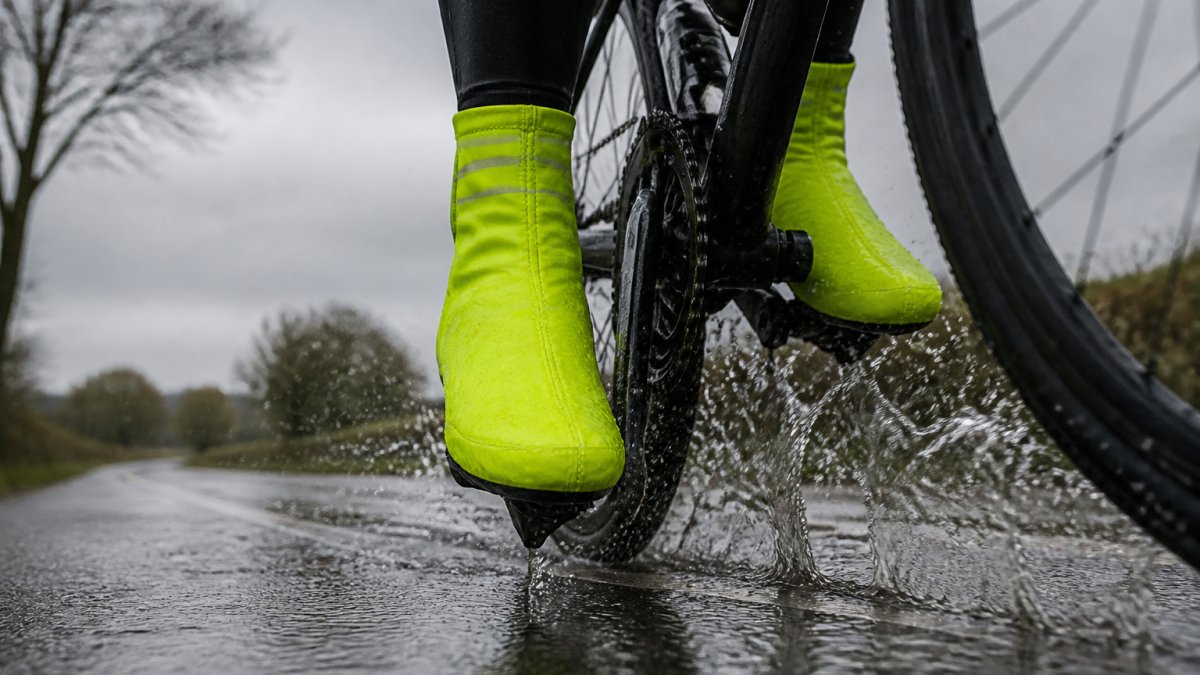
Even a well-made overshoe lets water in at predictable points. Knowing them helps you judge what you are actually buying.
- The cleat cut-outs. Water wicks up through the holes in the sole and straight into your shoe.
- The top cuff. Spray runs down your leg and into the gap between overshoe and tights.
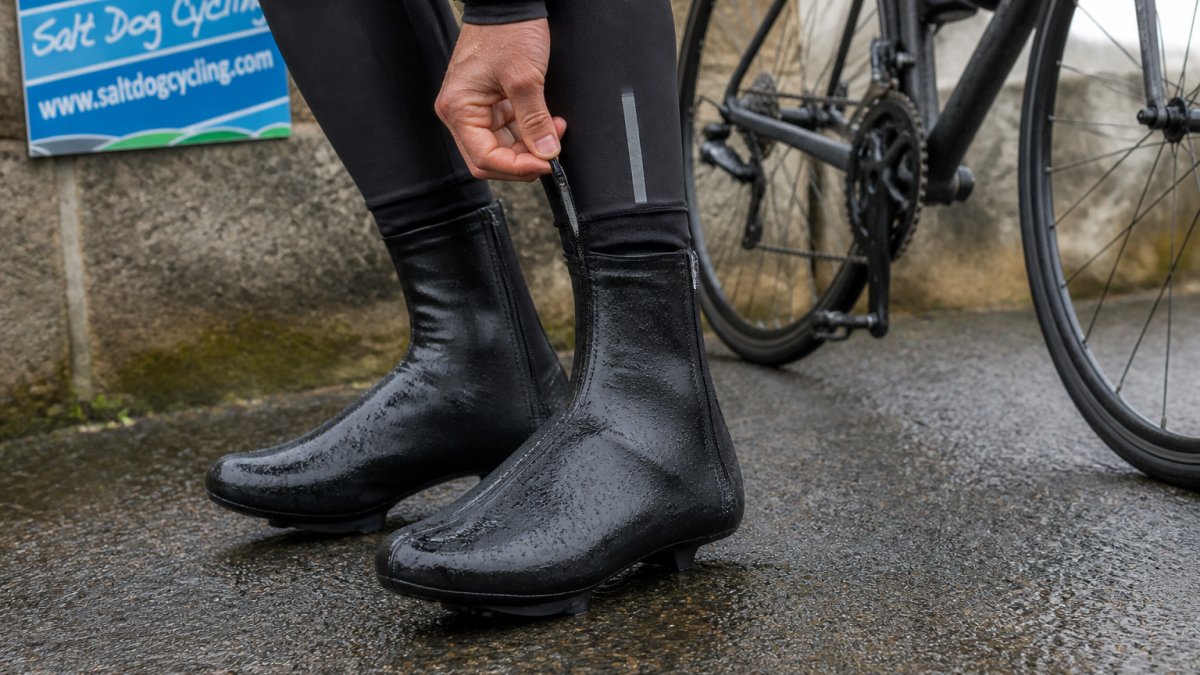
- The seams and zip. Cheaper covers leak along stitched seams and down the rear zip.
- The heel. Road spray thrown up by the rear wheel hits the back of the shoe first.
A cover with taped seams, a snug ankle closure and a decent height will slow all of this down. None of it stops a sustained downpour.
Waterproof vs Water-Resistant Cycling Overshoes
Waterproof and water-resistant overshoes differ in how much rain they keep out and how long they last before soaking through. Waterproof covers use a membrane or coated fabric that blocks liquid water. Water-resistant covers use a treated fabric that shrugs off spray and light rain but wets out over time.
The practical difference matters more than the label. A fully waterproof cover is less breathable, so on a hard effort your feet can get clammy from sweat rather than rain. A water-resistant cover breathes better and suits short commutes and drizzle, but it will give up in steady rain.
Our rule of thumb: choose waterproof if your rides regularly run over 45 minutes in wet weather or you ride in all conditions. Choose water-resistant if you mostly face damp roads, morning mist and the odd shower. Neither is "better" in the abstract, they solve different problems.
Types of Overshoe Compared: Pros and Cons
Overshoes come in a few distinct builds, and each suits a different rider. Here is how the main types compare.
| Type | Best For | Pros | Cons |
|---|---|---|---|
| Thin waterproof shell | Commuting, racing | Light, packable, aerodynamic | Little insulation, can feel clammy |
| Insulated waterproof | Cold, wet winter rides | Warm and dry, good coverage | Bulkier, slower to dry |
| Neoprene | Wet, mild conditions | Stretchy fit, affordable, warm when wet | Not fully waterproof, can get heavy |
| Water-resistant softshell | Drizzle, damp roads | Breathable, comfortable | Wets out in sustained rain |
A good example of the thin, aerodynamic end of the market is the Defeet Slipstream Overshoes, built to shield your feet from chilling cold and add an aerodynamic edge on cool days. At the other end, the Northwave Extreme Graphic Shoecover uses a durable polyester and elastane build with a 19cm height for good coverage, an internal silicone grip at the heel and ankle, and a rear reflective band for visibility.


Best for: riders who want a light, packable layer for damp commutes and cool training days. Skip if: you ride long distances in heavy, sustained rain, where a winter boot will serve you better.
Cycling Overshoes vs Winter Cycling Boots
The real decision is overshoes versus winter cycling boots, and it comes down to how wet and how cold your riding gets. Overshoes are cheaper, more versatile and work with the shoes you already own. Winter boots are warmer, drier and better suited to serious cold and persistent rain.
An overshoe covers a summer shoe. A winter boot replaces it, with a waterproof upper and insulation built in. If you ride through winter in all weathers, a boot is the more reliable option. If you commute and want a flexible layer you can add or remove, overshoes win on value.
You can browse the full range of winter cycling shoes to compare boots side by side. The Lake CX145 Winter Cycling Boots, for instance, pairs a waxed canvas, leather and waterproof membrane upper with a road-compatible outsole, so it handles wet roads without relying on a cover. For mountain bikers and mixed-terrain riders, a boot like the Lake MXZ303 Winter Cycling Boots adds Pittards WR100 leather and 3M Thinsulate insulation in the toe box.

Cycling Overshoes Sizing and Fit: Getting It Right
Getting the fit right is the difference between an overshoe that works and one that splits at the seam or flaps in the wind. Overshoes are sized to match your shoe size, but cut and stretch vary between models, so always check the maker's chart rather than guessing.
A few fit rules we pass on to customers:
- Size to your shoe, not your foot. Measure your cycling shoe, not your bare foot.
- Check the height. A taller cover seals better against spray but can bunch behind the knee.
- Mind the closure. Zips and Velcro straps should sit flush, not dig in.
- Allow for thicker socks. If you ride in winter socks, size up if you are between sizes.
If you are buying shoes and covers together and are unsure which Lake size to go for, the Lake Shoe Fit Tool can help you narrow it down before you order.
What to Check Before You Buy
Before you commit, run through the details that separate a cover that lasts a season from one that lasts several. The fabric, seams and closure do more for real-world performance than any marketing claim.
- Seams: taped or welded seams keep water out far better than stitched ones.
- Closure: a full-length zip with a storm flap beats a short zip or Velcro alone.
- Height: taller covers seal better against spray running down the leg.
- Reflectivity: a rear reflective band helps you stay seen on dark, wet rides.
- Durability: reinforced heel and toe panels resist scuffing when you walk.
If you want a specific option ready to buy, the Northwave Extreme Graphic Shoecover is a solid performance pick for cold, windy days when you also want extra visibility. Whatever you choose, check stock and size before you order, and ring or email us if you are unsure, we would rather help you get it right first time.
Kit Yourself Out for Wet Rides
Overshoes are one piece of a wet-weather setup, not the whole answer. Our Best Winter Cycling Gear Essentials article helps you complete the rest of your setup. Pair them with the right layers and you will ride through the wetter months far more comfortably.
Waterproof overshoes do their best work alongside full-length mudguards, a waterproof jacket with a decent collar, and tights that overlap the top of the overshoe so spray cannot run down into the gap. Gloves and a cap under the helmet finish the job. Get the layering right and a wet ride stops being something you dread.
Frequently Asked Questions
Do waterproof cycling overshoes actually keep your feet dry?
They keep the shoe and the top of the foot dry, but water still finds a way in through the cleat holes, the ankle cuff and the seams. A taped-seam overshoe with a snug ankle closure keeps out road spray and short showers well. In sustained rain, water runs down your legs and into the cuff, so pair them with tights that overlap the top of the overshoe. Treat them as a strong barrier against spray and cold, not a full waterproof seal.
Are cycling overshoes warm enough for winter?
Overshoes add a windproof and insulating layer over your normal shoes, which is enough for most cold, dry rides and mild wet days. The Defeet Slipstream Overshoes, for example, were designed to shield feet from chilling cold as well as cut wind. On frosty mornings or long rides below freezing, a dedicated winter boot with insulation such as Thinsulate lining keeps feet warmer for longer than an overshoe over a summer shoe.
What is the difference between waterproof and water-resistant cycling overshoes?
Water-resistant overshoes use a treated fabric that sheds light rain and road spray but soaks through in sustained wet. Waterproof overshoes use a membrane or fully taped seams to block water for longer. Check the seams: taped seams are the clearest sign of a genuinely waterproof build. Water-resistant is fine for damp commutes and drizzle; waterproof suits all-day rain and winter training.
Are winter cycling boots better than overshoes?
Winter cycling boots win in the coldest, wettest conditions because the waterproofing and insulation are built into the shoe, so there is no cuff for water to run into. Overshoes are cheaper, lighter and work with the shoes you already own. Many riders use overshoes for autumn and mild winter, then switch to boots when temperatures drop near freezing or the rain turns persistent.
How should you care for waterproof cycling overshoes?
Rinse them in cool water after wet, gritty rides and hang them to dry away from direct heat, never on a radiator. Wash sparingly with a mild soap, avoid fabric softener and skip the tumble dryer, which damages membranes and seams. Check the seams and the ankle gripper regularly, and store them flat so the elastic does not stretch out of shape. Proper care keeps the water-repellent finish working for longer.
The wet months do not have to mean parked bikes and miserable commutes. If you want gear that keeps you riding through the rain, Salt Dog Cycling can help you choose the right overshoes, winter boots and layers for your riding. We are a family-run shop run by cyclists, we offer free delivery on all orders, and you can talk to our team for honest advice on fit and kit. Get started with Salt Dog Cycling and ride through the wetter months in comfort.
